Dementia evaluation often requires more than observation
Dementia is rarely evaluated on the basis of one symptom or one visit alone. Patients may present with memory concerns, slowed thinking, reduced attention, or subtle changes in day-to-day function that are difficult to define clearly during a routine appointment. Family members may describe changes that seem meaningful, while screening results remain borderline or inconsistent.
This is one reason dementia evaluation can benefit from objective data. Clinical history, cognitive screening, and physician judgment remain central, but physiologic brain-function testing can add another dimension that strengthens the overall assessment.
Why objective data matters in cognitive assessment
Dementia involves progressive disruption of how the brain processes information. These changes may affect attention, working memory, and cognitive speed before decline becomes obvious in conversation or standard screening tools. In-office physiologic testing provides a way to measure aspects of brain function directly, offering reproducible information that complements the clinical picture.
Objective data can be especially useful when symptoms are subtle, when patient performance is variable, or when clinicians want stronger support for follow-up decisions and longitudinal monitoring.
How the COGNISION® System contributes to dementia evaluation
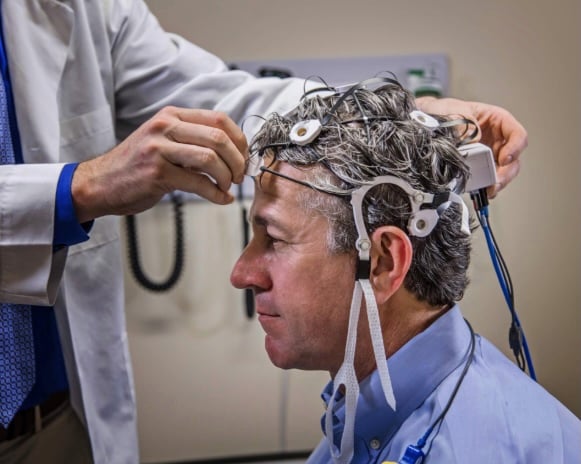
The COGNISION® System provides FDA-cleared ERP and EEG testing in the office setting. During the test, patients wear a headset while auditory stimuli are presented and brain responses are recorded. These responses provide information related to attention and working memory, while resting EEG contributes additional information about background brain activity.
This allows clinicians to incorporate measurable brain-function data into dementia evaluation in a way that fits within office-based care.
Adding clarity when symptoms are subtle
One of the practical advantages of the COGNISION® System is its ability to add structure when symptoms are difficult to interpret. A patient may report mild forgetfulness, a family member may notice changes, and screening may not yet provide a clear answer. In that setting, objective data can help strengthen the evaluation by giving clinicians another reference point.
This does not replace the broader diagnostic process. It supports it by adding measurable information that can guide how closely a patient should be monitored or whether additional evaluation may be appropriate.
Supporting more confident clinical decisions
When clinicians have objective data alongside history and screening results, they are often in a stronger position to make decisions about next steps. That may include closer follow-up, repeat testing, referral, or broader care planning depending on the patient’s presentation and overall risk profile.
The COGNISION® System helps strengthen that process by making dementia evaluation less dependent on subjective impressions alone.
Improving longitudinal monitoring
Dementia care requires follow-up over time, not just an initial evaluation. One of the advantages of the COGNISION® System is that it supports repeat testing and longitudinal comparison. As patients return for follow-up, clinicians can observe whether measurable changes in brain-function data are occurring over time.
This can help clarify whether symptoms appear stable or progressive and can support better-informed conversations with patients and families.
Enhancing communication with patients and caregivers
Objective testing can also improve communication. Discussions about cognitive decline can be difficult, particularly when symptoms are early or uncertain. Measurable brain-function data can help make those discussions more concrete and easier to understand.
This can reduce uncertainty and help patients and caregivers better understand why follow-up, monitoring, or additional evaluation may be recommended.
A more complete approach to dementia evaluation
Dementia evaluation is strongest when it brings together clinical judgment, patient history, screening tools, and objective data. The COGNISION® System adds a practical way to incorporate physiologic brain-function measurement into that process.
By strengthening assessment with reproducible data, the COGNISION® System helps clinicians approach dementia evaluation with greater clarity, stronger documentation, and more confidence in ongoing care decisions.