The Challenge of Recognizing Cognitive Decline Early
Dementia frequently develops gradually, with early symptoms that may be subtle or easily attributed to normal aging. Patients often present with slowed thinking, difficulty with attention, or mild memory concerns long before significant impairment becomes apparent on routine screening tools. While cognitive questionnaires are helpful, they can be influenced by education level, language, and patient engagement, limiting their ability to reflect true physiologic brain function.
Objective in-office testing offers an additional layer of insight that strengthens early detection and clinical confidence.
Why Physiologic Brain Assessment Matters in Dementia Care
Dementia involves progressive disruption of neural processing and synaptic function. Measuring how the brain responds to stimuli and processes information provides valuable physiologic data that complements clinical evaluation. EEG and event-related potential testing capture neural activity associated with attention, working memory, and cognitive processing speed, offering objective evidence of dysfunction that may precede overt clinical decline.
This physiologic perspective supports earlier recognition of disease progression and more precise longitudinal monitoring.
How the COGNISION® System Delivers In-Office Cognitive Testing
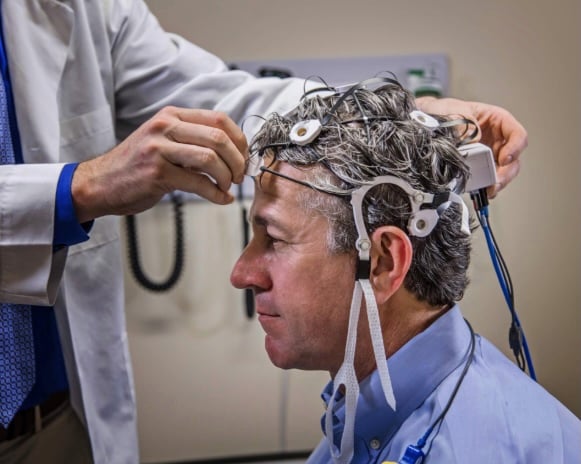
The COGNISION® System provides FDA-cleared ERP and EEG testing designed for in-office use. During the session, patients wear a comfortable headset while responding to auditory stimuli that generate time-locked brain responses. Resting EEG activity is also recorded to evaluate background neural function.
Results are presented in structured, customizable reports that integrate seamlessly into the clinical workflow and can be reviewed immediately after testing.
Supporting Early Dementia Identification
Objective ERP and EEG data allow you to detect abnormalities in cognitive processing that may not yet be evident on traditional screening tools. When patients present with early cognitive complaints, the COGNISION® System provides physiologic evidence that supports further evaluation, closer monitoring, or referral when appropriate.
This early insight is particularly valuable in patients with risk factors such as diabetes, cardiovascular disease, or family history of dementia.
Monitoring Cognitive Change Over Time
Dementia care benefits from longitudinal data that tracks progression objectively. Because testing is performed in-office, baseline measurements can be established and repeated at regular intervals. Quantifiable changes in neural processing allow you to demonstrate stability or decline with clarity, improving care planning and patient communication.
Objective trending also strengthens documentation and coordination with neurology, geriatrics, and other specialists involved in cognitive care.
Enhancing Clinical Confidence and Decision Making
By combining clinical assessment with physiologic brain data, you gain a more comprehensive understanding of cognitive health. The COGNISION® System supports informed decisions regarding follow-up frequency, lifestyle interventions, medication considerations, and referrals.
Rather than relying solely on subjective reports or screening variability, you are guided by reproducible neurologic measurements.
Advancing Dementia Care in the Office Setting
Early detection and ongoing monitoring are central to effective dementia management. The COGNISION® System provides a practical, evidence-based solution that brings objective cognitive testing directly into clinical practice. With streamlined workflow, technician-friendly operation, and immediate reporting, it integrates naturally into routine cognitive evaluations.
By incorporating physiologic brain assessment, you strengthen early diagnosis, improve longitudinal care, and support clearer clinical decision making for patients facing cognitive decline. Contact Primary Care Diagnostics to get started.