The Challenge of Objective Assessment in Neurology
In the clinical management of neurodegenerative diseases and brain injuries, subjective patient reports and pen-and-paper screenings often fall short of providing a complete diagnostic picture. For conditions like Alzheimer’s Disease, various forms of Dementia, and Traumatic Brain Injury (TBI), traditional assessments may not detect underlying neurophysiological changes until significant functional decline has already occurred. This “diagnostic gap” is particularly prevalent in high-functioning patients with significant cognitive reserves who can mask deficits during standard exams.
The Gold Standard for Dementia and Alzheimer’s Documentation
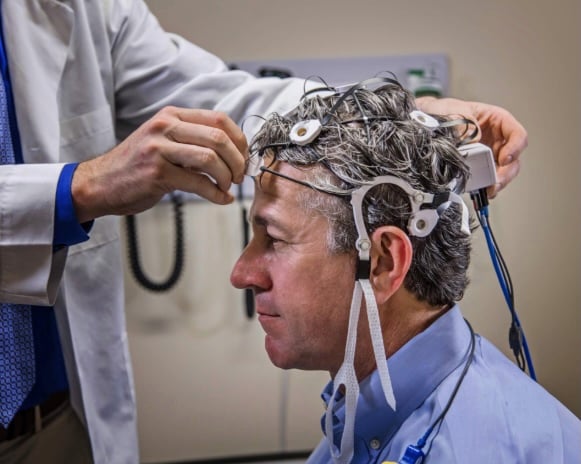
For neurologists, the primary concern remains the early detection and management of cognitive decline. The COGNISION® System bridges the diagnostic gap by providing FDA-cleared, objective data through Event-Related Potentials (ERP) and EEG.
- Tracking P300 Latency: COGNISION® tracks changes in P300 latency and amplitude, which are well-documented markers of cognitive processing speed and attentional resource allocation.
- Physiological Timeline of Decline: In neurodegenerative cases, these markers provide a physiological timeline of decline that correlates with disease progression.
- Monitoring Treatment Efficacy: Clinicians can objectively see if a new treatment plan is stabilizing neural processing speed or if further titration is required.
- Differentiating Complex Pathologies: Objective EEG/ERP data assists clinicians in differentiating between organic cognitive decline, such as early-onset Alzheimer’s, and cognitive symptoms resulting from mood disorders or sleep-related brain fog.
TBI and Persistent Post-Concussion Symptoms (PPCS)
While dementia is a daily clinical focus, there is a significant case for utilizing objective data in cases of Traumatic Brain Injury (TBI) and auto accidents. Many patients receive insufficient diagnostic workups because it is difficult to evaluate complex cellular and synaptic brain processes directly.
- Revealing “Silent” Deficits: Unlike imaging (CT/MRI), which often appears normal in mild-to-moderate TBI, ERP testing can reveal the “silent” deficits of a concussion.
- Quantifying PPCS Severity: The system helps clinicians quantify the severity of Persistent Post-Concussion Symptoms (PPCS) by measuring slowed neural processing and diminished cognitive workload capacity.
- Objective Legal & Insurance Documentation: The reproducible reports generated by COGNISION® provide the high-level documentation necessary for complex neurological cases, supporting medical necessity for insurance claims and legal cases.
Integrating COGNISION® into Specialized Neurology Workflows
Whether managing a memory clinic or evaluating a patient post-accident, the integration of objective brain function testing streamlines the diagnostic pathway.
- Longitudinal Tracking: By performing regular ERP assessments, neurologists can objectively monitor the rate of decline in Alzheimer’s patients, providing families with concrete data for long-term care planning.
- Objective Baselines: For patients at risk of TBI or those involved in auto accidents, establishing a post-injury baseline is critical for safe “return-to-work” decisions.
- Standardizing Documentation: Reproducible reports support medical necessity for advanced treatments and long-term disability assessments.
Elevate Your Neurological Diagnostic Standard
Advancements in brain health management require tools that move beyond observation and into objective physiology. The COGNISION® System empowers neurology practices to document cognitive decline and brain injury recovery with clinical precision.
To learn more about implementing the COGNISION® System for your practice, contact us today at (731) 234-5095 or (423) 914-2986, or fill out the form below to get started.