
Using the COGNISION® System to Document Cognitive Stability in Primary Care
The Challenge of Tracking Cognitive Change Mild forgetfulness, slower recall, or reduced multitasking ability are common concerns in aging patients. Distinguishing…

The Challenge of Tracking Cognitive Change Mild forgetfulness, slower recall, or reduced multitasking ability are common concerns in aging patients. Distinguishing…

Supporting Prevention with Objective Physiology Annual Wellness Visits are designed to identify early signs of disease and promote preventive care. For…

The challenge of monitoring cognition Cognitive complaints often emerge gradually, with patients or families describing memory lapses, reduced concentration, or slower…

Why hidden PAD matters Peripheral arterial disease often progresses silently until patients present with advanced ischemic symptoms. Many cases remain undiagnosed…

The Clinical Challenge of Overlapping Symptoms Patients with chronic conditions often present with leg discomfort that may reflect either neuropathy or…

FDA-cleared ERP/EEG testing that helps primary care clinicians assess brain function with objective, reproducible data. Early cognitive complaints often present as…
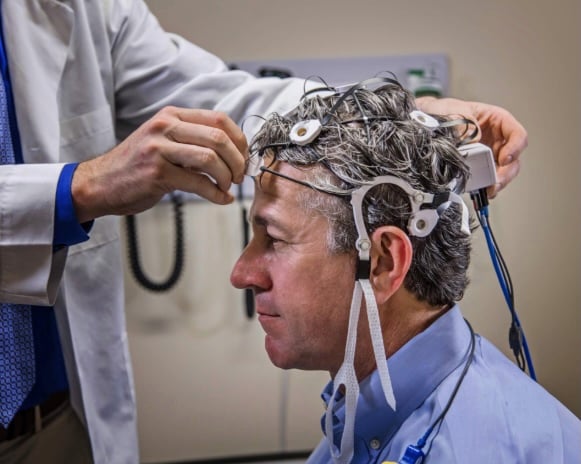
Why Post‑Concussion Fog Needs Objective Data Many patients feel mentally “slowed” or unfocused weeks after a mild traumatic brain injury, even…

Understanding the Diagnostic Challenge Small fiber neuropathy (SFN) and peripheral arterial disease (PAD) can both present with lower extremity symptoms such…

Standard imaging often looks normal in patients who describe vertigo, imbalance, or motion sensitivity. Without objective vestibular data you may try…

Taking the Next Step After Risk Identification The Annual Wellness Visit gives you a valuable chance to identify patients who may…